Best Home Warranty Companies for Seniors on a Fixed Budget (2026)

For seniors and retirees living on fixed incomes such as Social Security, pensions, or retirement disbursements, unexpected home repairs present an immediate risk to household solvency. To mitigate this risk, finding the best home warranty for seniors is critical. According to 2026 research from MarketWatch and This Old House, the national average monthly cost for a comprehensive plan ranges between $47 and $85 per month. In contrast, replacing a catastrophically failed HVAC system or major plumbing line can easily exceed $5,000 to $12,000 out of pocket.

Choosing a plan requires analyzing equipment exclusions and payout limits. Furthermore, buyers must review service fees and workmanship guarantees. By converting massive, erratic emergency repair bills into a predictable monthly expense, seniors can safeguard their savings.
Top Rated Home Warranty Companies for Senior Citizens on a Budget
When searching for the best home warranty for seniors on a budget in 2026, top choices include AFC Home Club for budget predictability, American Home Shield for aging infrastructure, Choice Home Warranty for low upfront costs, and Liberty Home Guard for dedicated customer support.
Choosing the right provider depends on the age of the home’s appliances and the homeowner’s monthly cash flow. Here is a breakdown of the top options for fixed-income households this year:
1. AFC Home Club (Best Value & Budget Predictability)
Base plans start at $38 to $65 per month with customizable service fees of $75, $100, or $125. Their standout feature is a plan-length repair guarantee, ensuring seniors never pay twice if the same faulty part breaks again.
2. American Home Shield (Best for Aging Infrastructure):
Ranging from $36 to $90 per month, this is the ideal choice for retirees living in homes older than 15 years who cannot afford to have claims rejected over a lack of past maintenance logs.
3. Choice Home Warranty (Best Low Upfront Cost)
This provider offers an affordable Total Plan ($55 to $68 per month) covering both appliances and major systems under straightforward terms, alongside a flat $100 service fee.
4. Liberty Home Guard (Best for Dedicated Customer Support)
With plans from $50 to $75 per month, Liberty provides top-tier customer service ratings (BBB A+) and flexible niche add-ons like gutter cleaning and pest control.
2026 Provider Comparison Matrix
| Feature | AFC Home Club | American Home Shield | Choice Home Warranty | Liberty Home Guard |
|---|---|---|---|---|
|
Monthly Cost Range |
$38 – $65 |
$36 – $90 |
$50 – $68 |
$50 – $75 |
|
Service Call Fee |
$75, $100, $125 |
$100, $125 |
$100 (Flat) |
$65 – $125 |
|
HVAC Coverage Cap |
$1,500 – $3,000+ |
$2,000 – $5,000 |
$3,000 per system |
$2,000 per system |
|
Workmanship Guarantee |
Length of Plan (1–3 Years) |
30 Day |
90 Days Parts / 30 Days Labor |
60 Days |
|
Roof Leak Coverage |
Optional Add-on |
Included in Platinum / Optional in Gold |
Optional Add-on |
Optional Add-on |
In-Depth Reviews of the Best Providers for Seniors
1. AFC Home Club
Verdict: Best Overall for Fixed-Income Budget Control and Contractor Choice.
AFC Home Club stands out for retirees primarily due to two distinct policy features: an industry-leading workmanship guarantee and the freedom to choose your own contractor. Most competitors offer 30-day repair guarantees. However, AFC guarantees parts and labor for the entire contract duration (1 to 3 years). If a repaired water heater breaks down six months later, you do not pay an additional service call fee.
Furthermore, seniors who have longstanding relationships with local, trusted plumbers and HVAC technicians will appreciate AFC’s policy. Additionally, the company lets policyholders select their own licensed technicians. As a result, seniors avoid unknown third-party contractors.
2. American Home Shield (AHS)
Verdict: Best for Aging Equipment, Rust/Corrosion, and Pre-Existing Conditions.
For seniors living in older homes with appliances and systems that are 10 to 20+ years old, American Home Shield provides the broadest contract protections against claim denials. The company explicitly covers mechanical failures caused by normal wear and tear, rust, corrosion, sediment buildup, and improper previous installations. Crucially, they do not require historical maintenance records for claim approval.
3. Choice Home Warranty (CHW)
Verdict: Best for Simple, Budget-Friendly Tiered Coverage.
Choice Home Warranty is designed for seniors. Specifically, it targets those wanting a budget-friendly plan structure. The Total Plan covers essential systems and major appliances. Specifically, it averages $55 to $68 monthly. Additionally, it features a standard $100 service fee. The workmanship guarantee extends to 90 days for parts and 30 days for labor, exceeding the industry minimum.
4. Liberty Home Guard (LHG)
Verdict: Best for High Customer Service Support and Niche Add-On Coverage.
Liberty Home Guard holds exceptional customer satisfaction ratings (an A+ rating with the BBB) and offers a catalog of 42+ optional add-ons suited for specialized home features. The company provides 24/7 claims reporting via a portal. Moreover, they offer a dedicated phone line. Therefore, seniors enjoy a frictionless claims process.
Which Home Warranty Covers Older HVAC Units Best? A Comparison
American Home Shield is widely considered the best home warranty for seniors who need coverage for older HVAC units because it covers undetectable pre-existing conditions, wear and tear, rust, and corrosion without demanding historical maintenance records. According to home service cost studies cited by First Home Start Guide, an HVAC replacement averages $5,000 to $12,000+. For seniors, finding a warranty with a high coverage cap on this specific system is essential.
Here is how the top competitors compare specifically on older HVAC systems:
- American Home Shield (Top Pick): The ShieldPlatinum plan provides an industry-high $5,000 HVAC cap alongside unlimited AC refrigerant replacement. AHS covers rust and corrosion and does not ask for decades of past service receipts.
- AFC Home Club (Runner-Up): AFC offers $1,500 to $3,000 limits depending on the tier. Their main advantage is the 1-to-3-year workmanship guarantee. Consequently, this prevents repeat service fees on older compressors. Nevertheless, they might request maintenance documents for neglected units.
- Choice Home Warranty (Budget Alternative): Choice covers heating and AC with a solid $3,000 limit per system on its Total Plan. However, they require that units are in good working order when coverage begins and exclude known or unknown pre-existing conditions.
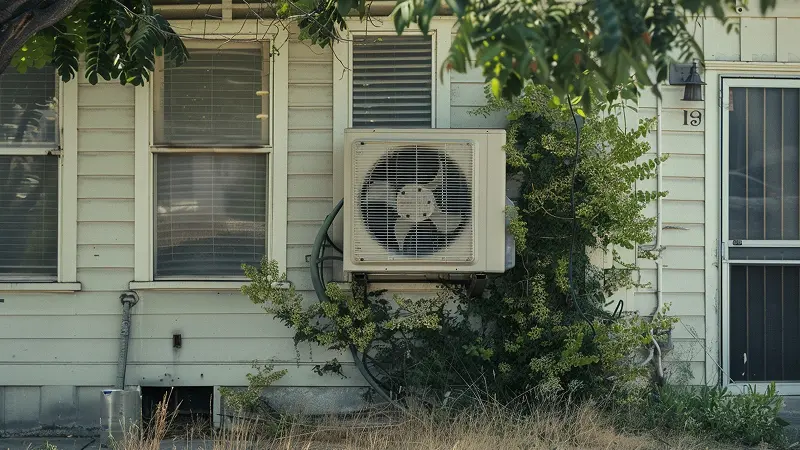
What is the Average Cost of a Home Warranty with Roof Leak and AC Coverage?
The average cost of a home warranty with both roof leak and AC coverage ranges from $55 to $95 per month. Typically, this includes a base plan. Next, you purchase a dedicated roof leak add-on. Total annual costs typically run between $660 and $1,140.
Here is the exact breakdown of those costs for 2026:
- Comprehensive Combo Plan: A base plan covering central AC, heating, plumbing, electrical, and major kitchen/laundry appliances costs between $45 and $80 per month.
- Roof Leak Add-On: Roof leak protection is usually an optional add-on costing $5 to $12 per month. (Note: Premium tiers, such as AHS’s ShieldPlatinum, may bundle this natively).
- Service Call Fees: Each time a technician is dispatched to the home, seniors will pay a separate trade service call fee ranging from $75 to $125.
- Coverage Scope: It is important to know that standard roof leak protection covers the repair of water leaks over occupied living areas (asphalt shingle or tile roofs) up to a dedicated aggregate cap of $500 to $1,500 per year. It does not cover full roof replacements or secondary structures like patios.
The Savviest Saver Approach: Protecting Your Home Equity in 2026
At Savviest Saver, our core mission is to help older homeowners preserve their wealth, protect their home equity, and make informed financial decisions. When an essential home system fails, seniors without adequate emergency liquid reserves are frequently forced into bad financial positions. Seniors might use high-interest credit cards or undertake reverse mortgages. Otherwise, deferring critical repairs leads to secondary property damage.
Ultimately, the best home warranty for seniors acts as a financial shield, converting an erratic $5,000 emergency repair liability into a predictable monthly expense.
How Seniors Can Maximize Savings When Enrolling
To ensure you are getting the best deal on your fixed income, follow these Savviest Saver best practices:
- Request Senior or Promotional Discounts: Providers routinely offer promotional discounts, such as $150 to $250 off annual plans, or 1–2 months of free coverage. Always ask phone sales representatives to match active online promotions.
- Opt for Annual Billing Over Monthly: Paying your premium annually often waives administrative processing fees, saving you between $50 and $100 per year.
- Align Service Fees with System Age: Newer systems rarely break. Thus, choose a higher $125 service fee to lower your monthly rate. Conversely, older systems fail often. In this case, select a lower $75 fee to reduce repeat costs.
- Review the 30-Day Waiting Period Closely: Use the standard 30-day trial/cancellation window to read the sample contract line-by-line. Verify your specific HVAC, plumbing, and roof leak coverage limits before the policy becomes legally binding.
In conclusion, seniors should prioritize comprehensive coverage and flexible payments. Ultimately, this allows them to age in place safely. As a result, they avoid the threat of catastrophic repair bills.
Find the right coverage for your home’s systems and appliances →
Disclaimer
SavviestSaver.com is an independent, advertising-supported website. We may receive compensation from companies and partners featured on our website when users click on certain links, submit an application, or take other qualifying actions. This compensation may influence how and where offers are displayed, but it does not determine our editorial opinions or recommendations.
The information, opinions, reviews, and recommendations published on SavviestSaver.com are provided for general informational and educational purposes only. They are based on information available to us at the time of publication and do not constitute financial, legal, tax, or investment advice. Readers should independently evaluate any product or service and review its terms, conditions, fees, eligibility requirements, and risks before making a decision.
SavviestSaver.com does not provide, originate, or guarantee financial products or services. We are not responsible for the products, services, websites, content, offers, or practices of third-party companies. Any decision to apply for, enter into, or use a financial product or service is made solely by the consumer and the applicable provider.
Company names, product names, logos, and trademarks mentioned on this website belong to their respective owners. Their appearance on SavviestSaver.com does not necessarily imply an endorsement, partnership, affiliation, or sponsorship unless expressly stated.
We make reasonable efforts to keep the information on our website accurate and up to date. However, financial products, rates, terms, eligibility requirements, and other details may change. Information on SavviestSaver.com should not be relied upon as a substitute for reviewing information directly from the provider. We encourage readers to verify all relevant details with the company offering the product or service.
Home Equity Agreement Disclaimer
Home Equity Agreements (HEAs), and Home Equity Investments (HEIs), are not traditional loans and may have different terms, costs, and regulatory treatment depending on the provider and the state in which you live. An HEA generally involves receiving funds today in exchange for sharing a portion of the future value or appreciation of your home.
Because the agreement is secured by an interest in your home, certain events (such as selling the property, refinancing, or reaching the end of the agreement term) may trigger repayment or settlement obligations. Depending on the terms of the agreement and changes in your home’s value, the amount you ultimately owe or give up may be greater than the amount you initially received.
Before entering into an HEA or HEI, carefully review the complete agreement, including fees, settlement terms, valuation methods, repayment obligations, and any potential impact on your home. Consider consulting a qualified financial, legal, or tax professional to determine whether the product is appropriate for your individual circumstances.
SavviestSaver.com does not guarantee that any particular home equity product is suitable for your financial situation or that you will qualify for any offer discussed on this website.
Find the right coverage for your
home’s systems and appliances